Android tablet solution for Scania HGV driver training improved training safety, increased data visibility
Scania partnered with TK Engineering to develop an Android tablet solution for heavy goods vehicle (HGV) driver training. The project improved training safety, increased data visibility, and created a more efficient and professional driver coaching experience.
Improving safety and driver training efficiency
Before driver trainers had to sit between the front seats to monitor the instrument panel and observe how drivers operated the pedals during training sessions. This setup created ergonomic challenges and increased safety risks, especially during sudden braking situations.
Whilst being ergonomically awkward, the practice presented a safety risk. Scania needed a safer and more effective way to monitor driver behavior and collect training data in real time.
“We realised that in worst case our trainers could be injured in a harsh braking situation”
Magnus Andersson, Product manager at Scania’s E-Business and New Media
Scania will launch WICkit Wireless Instrument Cluster
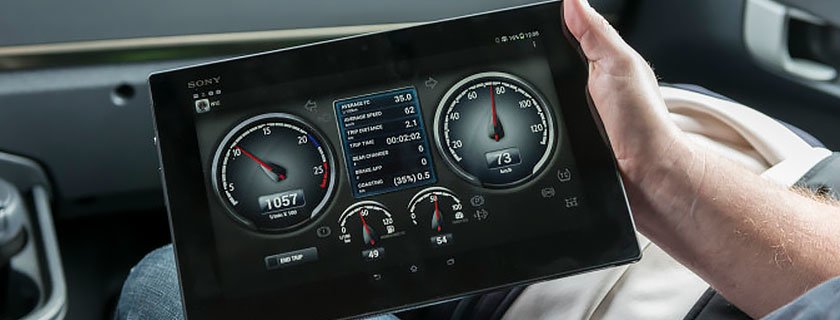
This awareness prompted the idea of developing a tablet application that would precisely replicate the data from the instrument panel, allowing the trainer full visibility of all driver inputs, plus providing data reporting capabilities.
Following an ongoing pilot study in Denmark, The tool are distributed with in the network for Scania Driver Trainers. Scania will launch WICkit Wireless Instrument Cluster. The kit includes a durable tablet and the recently-developed Vehicles Communication Interface (VCI), which wirelessly relays data from the HGV’s control system to the tablet. TKE developed the Android driver that allows a smartphone or tablet to connect to any Kvaser USB or Wifi CAN interface, whilst the Kvaser Blackbird CAN interface wirelessly connects the trainer’s tablet to the CAN bus.
Real-time access to driver inputs
The device gives trainers real-time access to driver inputs in sessions run before and after an eco-training theory session. A distinct advantage of the VCI is that additional information such as momentary fuel consumption is displayed. With the naked eye its can be difficult to determine the precise pressure on the accelerator pedal but the tablet digitally shows this value as a percentage. The driver trainer also receives information about the number of gear shifts and braking, coasting as a percentage and in kilometres as well as the total distance and total time spent in driver training.
Following the session, the instructor can automatically generate a report with accumulated data during training, which can then be emailed to the driver and his or her employer. “It’s simply more professional and more efficient than jotted notes on paper as well as providing a better work environment,” says Magnus Andersson.
Java API for easy development of native Android applications
The Kvaser Android driver comes with a Java API for easy development of native Android applications. There’s also a standard C API that helps users port legacy CAN code. CANopen support for Android is provided within TKE’s CANopen Stack for Kvaser interfaces.